Geant4 Japanese Tutorial for Beginners 2025
 arl
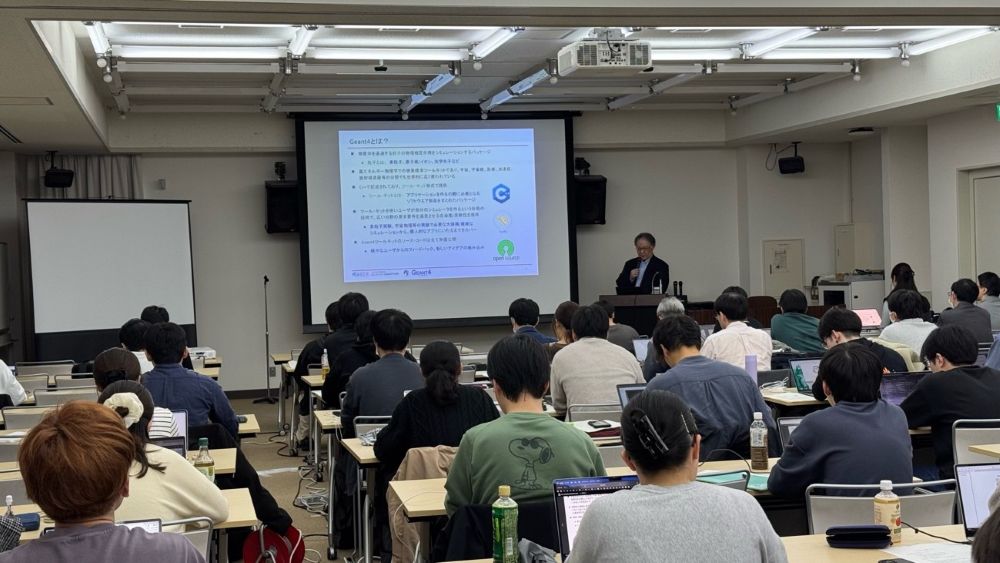
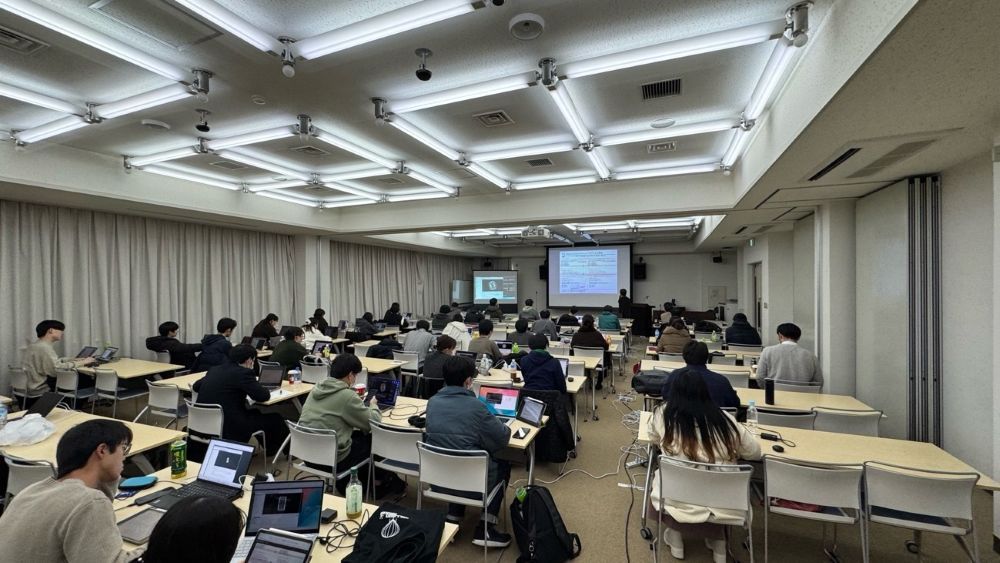
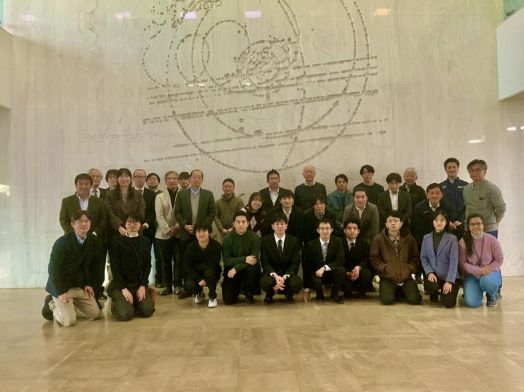
arlFrom December 2 to 4, 2025, the Geant4 Japanese Tutorial for Beginners 2025 was held at Kobe University to provide training in radiation simulation. The tutorial was delivered as two courses: the Detector Course for high-energy and nuclear physics and space-science applications, and the Medical Applications Course for the medical physics community. A total of 59 participants from universities, research institutes, and companies in Japan attended. Members of the Geant4 Japan Group served as instructors, and four staff members from the KEK Computing Research Center contributed to the program.
Geant4 is a software toolkit for detector simulation that provides C++ libraries for geometry definition, physics interactions, and particle tracking, enabling users to build applications tailored to their own purposes by combining these components. In this tutorial, based on training materials prepared by the Geant4 Japan Group, we explained fundamental concepts and incorporated hands-on exercises to help participants deepen their understanding.
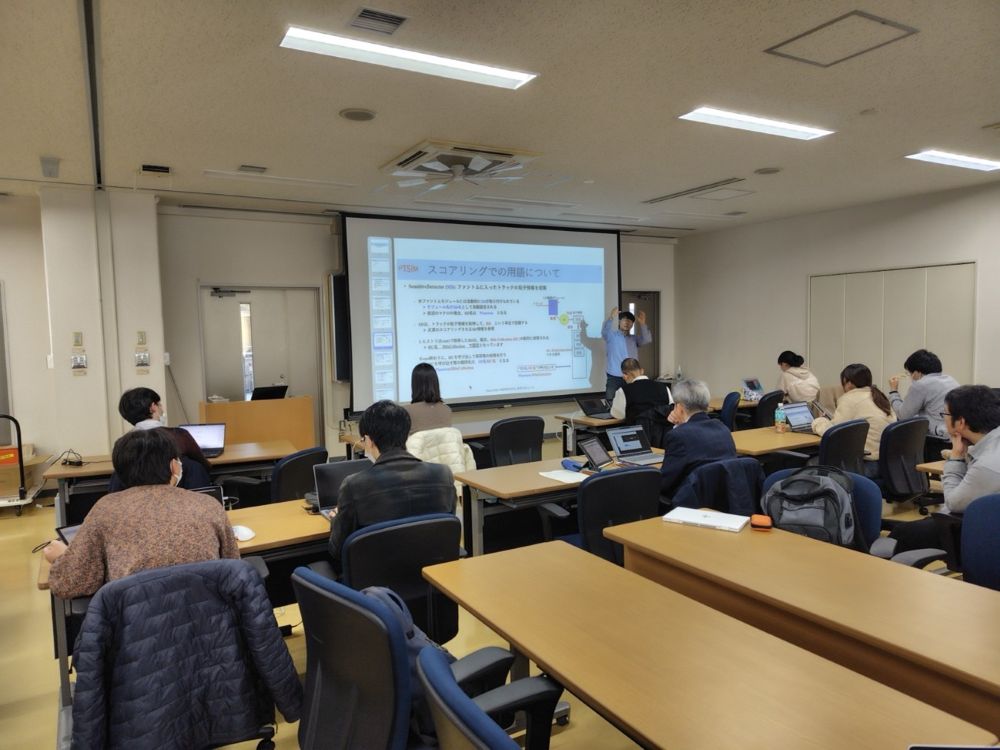
On the first day, participants from both courses attended a joint session covering an overview of Geant4, its basic structure and essential classes, and the setup of the virtual machine environment. From the second day onward, the tutorial proceeded in the two separate courses. In the Detector Course, participants learned the fundamentals of application development step by step, including how to define detector geometry, generate primary particles, describe physics interactions, and retrieve and output simulation results. In the Medical Applications Course, we focused on the use of simulations for the analysis of physical phenomena in medical physics using the Geant4-based PTSIM code. Hands-on exercises were conducted using examples such as dose calculations for treatment planning in radiotherapy facilities, and on the final day, we also offered a lecture introducing DNA-scale radiation simulation with Geant4-DNA and its applications. In addition, an individual consultation session was held in parallel, providing opportunities for discussions tailored to each user’s challenges and research themes in Geant4 simulations.
Lecture materials and source code for the practical exercises are available on the official tutorial website.