
- Topics
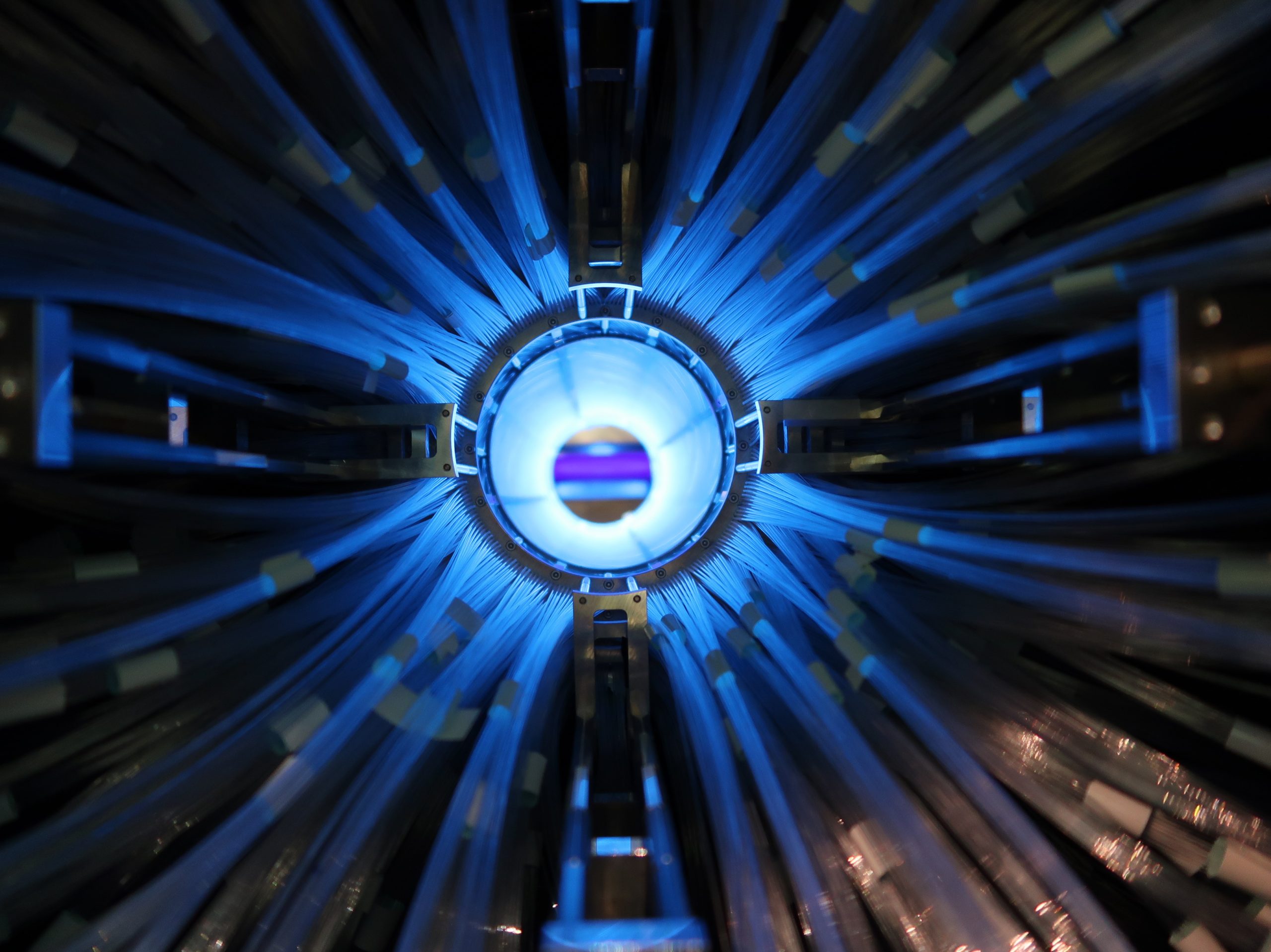
Detector Solenoid Magnet for the COMET Experiment Installed— Probing One-in-a-Hundred-Trillion Phenomena
January 7th, 2026
-
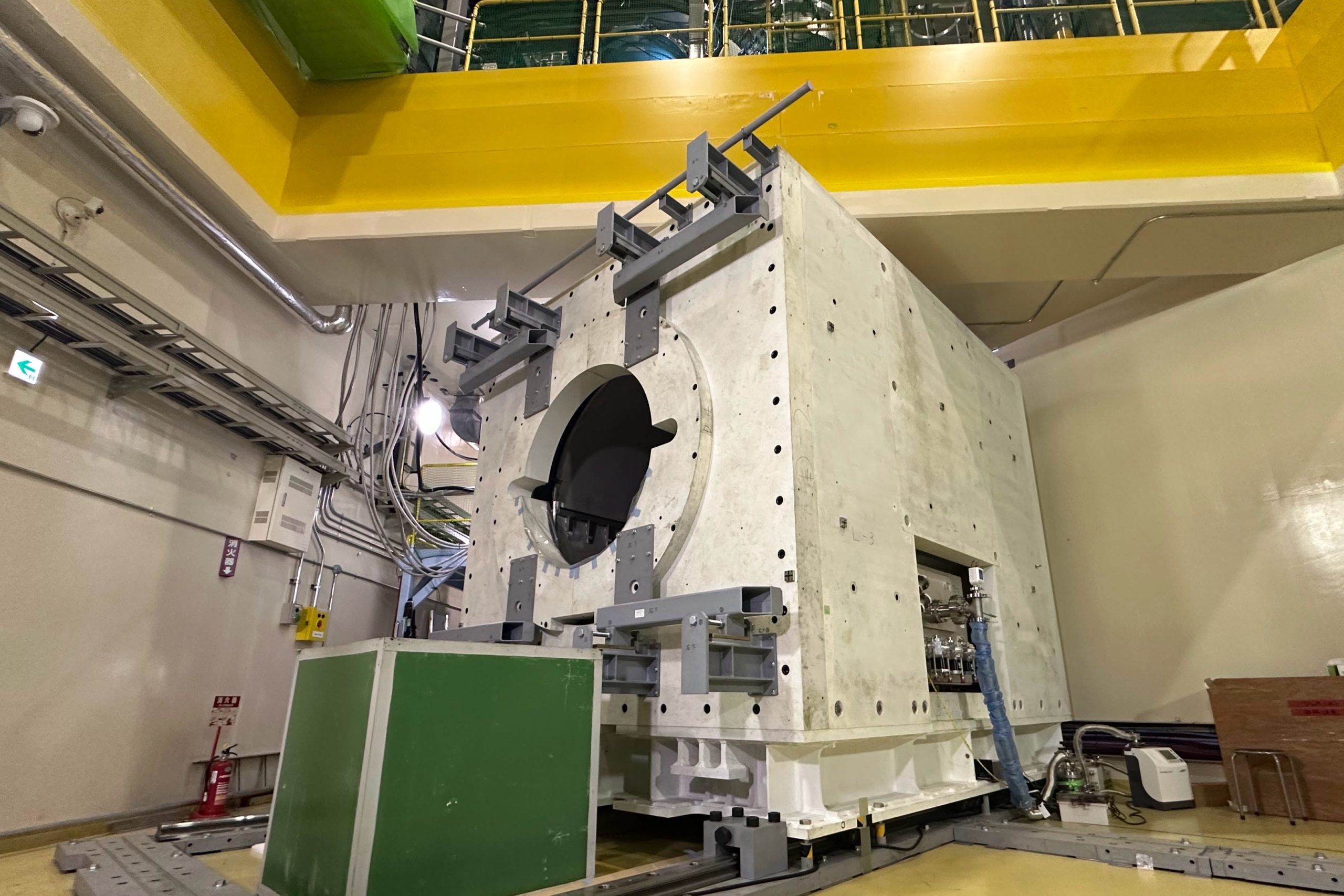
Detector Solenoid Magnet for the COMET Experiment
The COMET (COherent Muon to Electron Transition) experiment is an international collaboration aiming at discovering new physical phenomena using an elementary particle known as muon. Conducted at the Japan Proton Accelerator Research Complex (J-PARC) , the experiment searches for the “muon-to-electron conversion,” an extremely rare phenomenon in which a muon is expected to transform into an electron with a possible probability of one in one hundred trillion.
In the Standard Model of particle physics, a muon decays into an electron and two neutrinos, or it is captured by an atomic nucleus and emits a neutrino. In these processes, the number of particles of each type—such as electrons and muons, collectively referred to as lepton flavor—remains constant before and after the reaction. This principle is known as the conservation of lepton flavor. In contrast, the muon-to-electron conversion process involves a muon converting directly into an electron without emitting neutrinos, thereby violating lepton flavor conservation. If this phenomenon is observed, it clearly constitutes a major discovery that cannot be explained by the Standard Model.
In the COMET experiment, a dedicated experimental beamline was completed in 2023. Subsequently, in October 2024, the “pion capture solenoid magnet,” which forms the core of the experiment’s superconducting magnet system, was installed along the beamline. This large-scale magnet—measuring 2 meters in diameter and 6.5 meters in length—collects pions produced at an internal target using a magnetic field, aligns their trajectories, and transports them toward the experimental area.
-
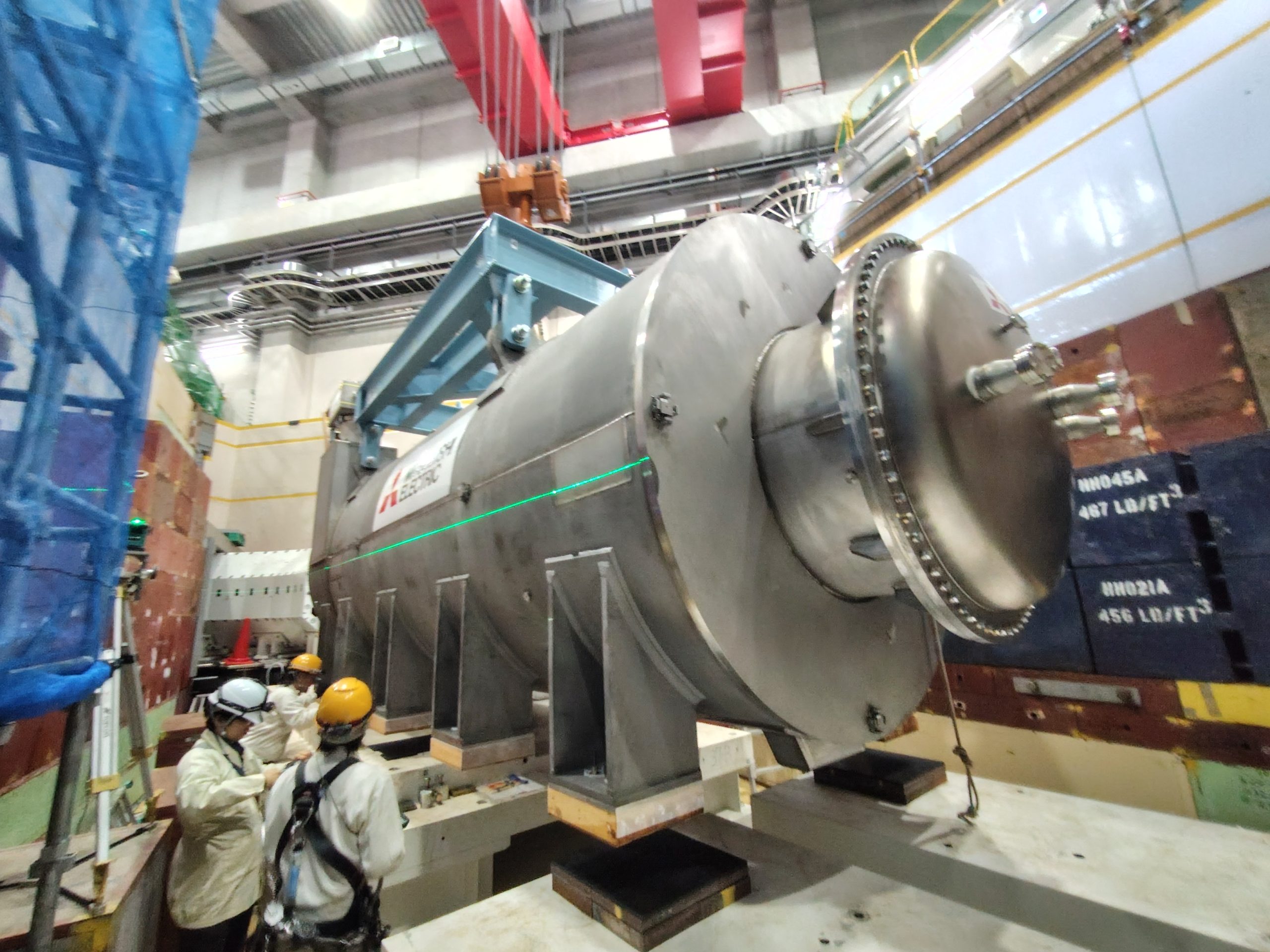
Pion capture solenoid magnet
With the recent installation of the detector solenoid magnet, the full series of solenoid magnets has now been successfully connected in the COMET experimental facility. The installation work was carried out with great care, using cranes and dedicated fixtures to achieve positional alignment with millimeter-level precision. The detector solenoid magnet was manufactured by a research group of Osaka University in collaboration with the J-PARC cryogenics section. In the COMET experiment, this magnet enables precise measurement of electron momentum and plays a crucial role in detecting signals of the muon-to-electron conversion process.
A video showing the installation process is available at the link below:
KEK-IPNS YouTube Channel: “COMET Solenoid Magnet Installation”
Professor Satoshi Mihara of the Hadron Group at the KEK Institute of Particle and Nuclear Studies, who is involved in the COMET experiment, commented, “Going forward, we will energize the magnet to verify the generated magnetic field and conduct emergency shutdown tests. After that, we will integrate the detector into the magnet. Working together as an experimental collaboration, we aim to begin the experiment as early as possible.”